Good to see you!
Welcome to Dulux
Terms and Conditions
Thanks for registering
We will sent you colourful news every now and then
Registration complete
Forgotten your password?
Please enter email address associated to your account
Password changed successfully
We successfully updated your personal details.
Forgotten your password?
Would you spare a minute to answer 3 questions
Thanks for registering
We will send you colourful news every now and then
Delete Account
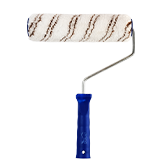
Dulux Smart Unifiber Roller
-
Coverage Good Coverage per dip
-
Drying Time NA
-
Beautiful Finish
Product Description
• Works best with Distemper and Emulsions
• Glides effortlessly across all surfaces
• Built to last for repeated use
Application Description
Health & Safety
Tips & Advice
-
1. After useStep 1: Scrape Off Excess Paint :The best way to clean a paint roller cover is to start by scraping any excess paint off the roller and back into your paint tray with a putty knife or spatula. Then use up any paint that’s still on the roller by rolling it onto a piece of scrap paper.
Clean your roller immediately after using it for the best outcome. Step 2: Wash the Roller Frame :If you’re cleaning a roller after using an acrylic- or latex-based paint , remove the roller cover and place it in a bucket of hot water with a few drops of dish detergent.Place the roller frame in the bucket as well. Work the paint off the roller cage and handle, and use a wire brush to remove paint that’s lodged in the frame. Rinse well. For oil-based paints, submerge the roller in a suitable solvent like turpentine or mineral spirits to dissolve the paint, then rinse with solvent. Step 3: Wash the Paint Roller Cover :Keeping the roller cover in the bucket, work the paint out of the fibers with your hands. When all the paint is removed, rinse the roller thoroughly with warm water.To clean a roller after using oil-based paint, place the cover in a small container of paint thinner and scrape excess paint off the roller with a putty knife or the curved edge of a spatula. Let it dry. Step 4: Get the Water/Solvent Out: Remove any lingering moisture/solvent in the paint roller cover by shaking out as much water/solvent as possible. Step #5: Let dry: Stand the cover on its end to dry on a piece of scrap paper or a drop cloth—do not lay it flat.
How much paint do I need?
More than one wall to paint? Try our advanced paint calculator
Measure the height and length of the surface you want to paint (in metres or centimetres).

Your Measurements:
{{!-- This value will be injected with JavaScript --}}
Amount needed:
{{!-- This value will be injected with JavaScript --}}
Actual coverage will depend on the conditions of the surface. If the colour change is strong, more coats may be required.
Add a new job
Add a new job
Edit a job
Delete job
Are you sure? All notes, photos and saved items will be deleted.
Save colour
Save to My Workspace
Add to job

Dulux Smart Unifiber Roller
Save job